PORT HISTORY
|
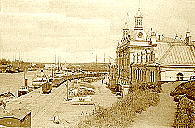
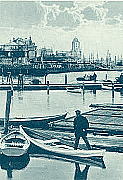
Vyborg is an ancient Scandinavian city. As far back as in the XIIth century the Novgorod merchants arranged a trading station on the territory of today's Vyborg. In the XIIIth century the Swedes occupied the south-west Karelia and constructed a castle near the Russian settlement (1293). The castle was gradually being surrounded by town building. As a result of the North War (1700-1721) Vyborg was returned to Russia. The history of the sea port is closely connected with the history of the city. The port was intensively developed after putting into operation the Saimaa Canal (1856) which linked up the vast lake region of the South and Central Finland with warehouses and approach roads had been constructed in the port. After the Great Patriotic War (1941-1945) the destroyed port had to be almost fully reconstructed. The port modernization also took place: new cargo handling facilities were inculcated; up-to-date mechanization of cargo handling operations was intensively put into life. All the postwar years have seen the steady growth of the port's throughput capacity: if in the 50s the port of Vyborg handled up to 500,000 t of various cargoes annually, by the mid 80s the port's throughput capacity had come to 3 mln t. In the beginning of its postwar development the port of Vyborg handled mainly mineral and building materials and timber: granite crushed stone of various fractions, sulphur pyrite, cal, fir paper wood. Bulk cargoes were carried to consignees in Baltic countries, on the Volga and the Kama, and paper wood was exported to West European countries.
|